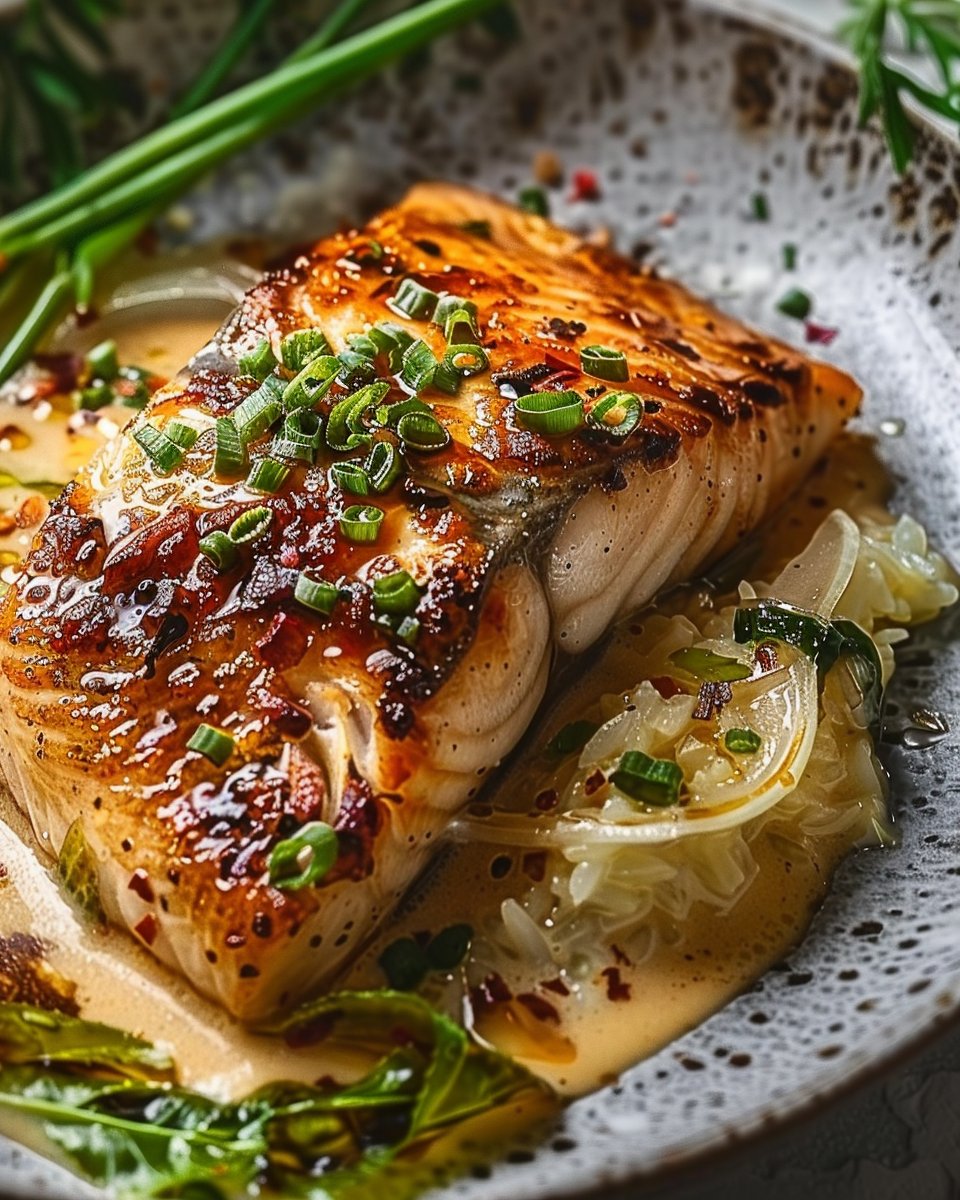
It’s that exhilarating feeling of creating something extraordinary with just a little effort. Picture this: a gentle, fragrant miso coconut sauce enveloping tender sea bass, served atop sweet coconut rice and paired with crunchy, pickled scallions and succulent bok choy. It’s a meal that simultaneously feels decadent yet balances well for a weeknight dinner—a luxurious escape without any travel.
Why you’ll love this dish
This Sea Bass in Miso Coconut Sauce is not only a treat for the taste buds but also a feast for the eyes. Perfect for those evenings when you want to impress without spending all day in the kitchen, it effortlessly blends flavors that are both exotic and comforting. What’s not to love about a dish that brings a little sunshine to your dinner table?
“The first bite of this meal made me think I was dining at a high-end restaurant. It was rich, flavorful, and yet somehow felt light—definitely a keeper!”
Preparing Sea Bass in Miso Coconut Sauce: A Luxurious Weeknight Dinner
The beauty of this recipe lies in its simplicity—the cooking process walks you through each step clearly, ensuring that every component shines. The roasted sea bass is beautifully complemented by the silky miso coconut sauce, and don’t get me started on that coconut rice. You’re looking at a delightful experience that involves minimal fuss, yet delivers maximum flavor.
What you’ll need
Gather these items for a captivating dinner experience later.
Pickled Scallions:
- 5 scallions, thinly sliced (about 2 cups)
- 1/4 cup boiling water
- 1/4 cup rice vinegar
- 2 tablespoons granulated sugar
- 1/2 teaspoon mustard seeds
- 1/4 teaspoon salt
Coconut Rice:
- 1 cup jasmine rice
- 1/2 cup coconut milk
- 1 cup water
- 1/4 teaspoon salt
Miso Coconut Sea Bass:
- 1 pound sea bass fillets
- 3 tablespoons olive oil, divided
- 1/4 cup finely chopped onion
- 2 garlic cloves, minced
- 1 small Thai chili, finely chopped
- 4 ounces shiitake mushrooms, stems removed and caps thinly sliced
- 1 tablespoon white miso paste
- 7 ounces coconut cream
- 1 tablespoon rice vinegar
- 2 teaspoons granulated sugar
- 1 teaspoon chili oil
- Zest and juice of 1/2 lime
- Salt and black pepper, to taste
Vegetables:
- 1 tablespoon oil
- 1/2 pound baby bok choy, halved lengthwise
- Salt and black pepper, to taste
Step-by-step instructions
Pickling the scallions: In a heatproof bowl, stir together boiling water, rice vinegar, sugar, mustard seeds, and salt until the sugar has dissolved. Toss in the sliced scallions. Set this aside for about 30 minutes—allowing those flavors to dance together.
Rinsing the rice: Rinse the jasmine rice under cold water until the water runs clear, catching any excess starch. Drain well.
Cooking coconut rice: In a medium saucepan, add the rice, coconut milk, water, and salt. Bring this delightful mixture to a boil, then cover, reduce the heat, and let it simmer for 15–20 minutes or until the liquid is fully absorbed.
Roasting sea bass: Preheat your oven to 425°F. Place the sea bass on a sheet pan, drizzle with 1 tablespoon of olive oil, and season it up with salt and pepper. Roast for about 12–15 minutes, until it’s opaque and flakes easily.
Sautéing aromatics: In a large skillet, heat the remaining oil over medium-high heat, tossing in the onion, garlic, chili, and shiitake mushrooms. Cook for 4-5 minutes until the mushrooms soften and turn golden.
Creating sauce: Stir in the miso paste until smooth, then add the coconut cream, rice vinegar, and sugar. Bring your sauce to a gentle simmer and allow it to thicken slightly for 7–8 minutes, stirring frequently.
Final touches: Add chili oil, lime zest, and lime juice, adjusting salt and pepper to your liking. Keep this warm over low heat.
Cooking bok choy: In another skillet, heat oil over medium-high heat. Lay in the bok choy cut-side down and cook for 7–8 minutes, flipping once until it’s lightly charred and tender.
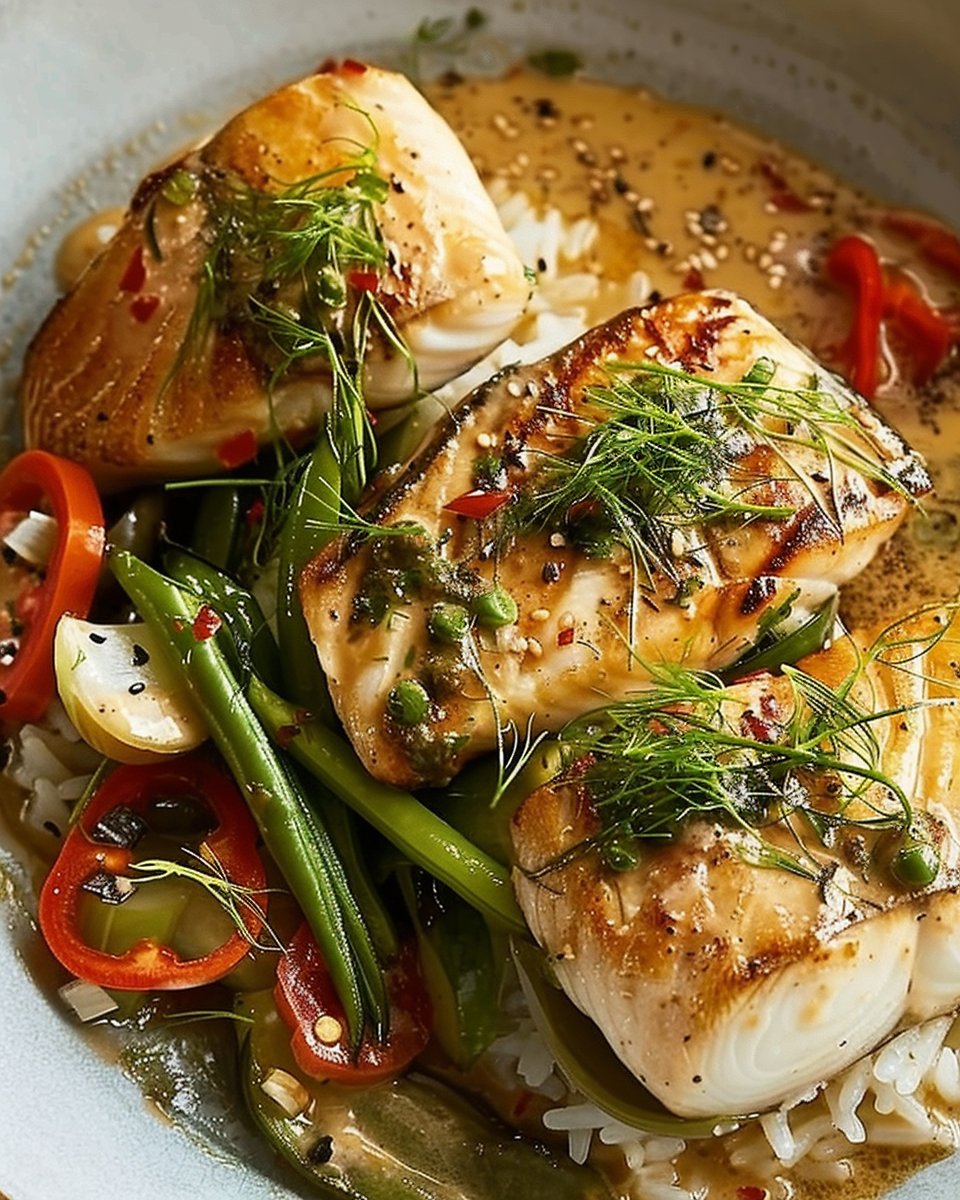
Serving it up: On each plate, spoon the coconut rice, top with the lovely roasted sea bass, and lavishly drizzle that luscious miso coconut sauce over it. Garnish with your pickled scallions and serve with the seared bok choy on the side.
Best ways to enjoy it
The beauty of this dish is in its versatility. You can serve it casually, relishing every bite yourself, or elevate the experience with a simple wine pairing—perhaps a light Chardonnay or a refreshing Riesling. For a truly gorgeous presentation, consider serving it on deep, wide plates, allowing each component to shine.
Storage and reheating tips
If you have leftovers (and that’s a big if, as this dish tends to disappear quickly), allow them to cool down and store in an airtight container. The sea bass and miso coconut sauce can last in the refrigerator for up to two days. Reheat gently in a skillet over low heat, adding a splash of coconut milk if needed to regain some creamy consistency.
Tips for success
- Choosing the right fish: Fresh sea bass is essential—look for fillets that are moist, firm, and have a mild smell of the sea.
- Don’t rush the pickling: Allowing the scallions to pickle for a while really enhances their flavor. It’s worth the wait!
- Don’t overcook the bok choy: You want that beautiful char and tenderness without losing its green vibrancy.
Creative twists
If you’re keen on experimenting, consider swapping the sea bass for salmon or even a flaky white fish like snapper. Try adding other vegetables into the mix, like snap peas or bell peppers. A sprinkle of toasted sesame seeds on top of your finished plate could add that lovely crunch and nuttiness.
Your questions answered
Q: Can I use another type of fish for this recipe?
A: Absolutely! While sea bass delivers fantastic flavor, salmon, snapper, or even tilapia would work beautifully.
Q: Is there a substitute for coconut cream?
A: If you’re looking for a lighter version, using full-fat coconut milk can work, but it may alter the richness.
Q: What’s the best way to store leftovers?
A: Store them in an airtight container in the fridge for up to 2 days. Reheat gently to avoid overcooking the fish again.
Enjoy preparing this wonderful dish—it’s sure to become a regular in your weeknight rotation!